





★★★★★VERIFIED
"It lathers up beautifully. It's so gentle I can use it on my face, I can use it on my body."


 As seen on Shark Tank

Deodorizing Soap with Persimmon
From $19.97
See What Works


Menopause odor
Sweat odor
01Two kinds of odor
Most people think of body odor as sweat. But skin can produce odor in more than one way, and the source changes what helps.
Sweat odor forms when skin bacteria break down sweat, mostly in the underarms, into short-chain acids and sulfur compounds. Menopause related odor is different.
It is linked to compounds that form when the oils on the skin's surface oxidize. The best known of these is nonenal.

Sebaceous glands coat your skin in sebum, a mix of triglycerides, wax esters, squalene and free fatty acids. They are most concentrated on the scalp, face, chest and upper back.
The mix is not fixed. In the 2003 study that first described Nonenal in body odor, omega-7 unsaturated fatty acids (such as palmitoleic acid) on the skin’s surface increased with age.¹
GOOD TO KNOW
A fatty acid is a chain of carbon atoms, counted from the end
“Omega-7” means the first double bond sits at carbon 7.
Double bonds are the weak spots where oxidation can occur.
Source: Haze S et al. J Invest Dermatol. 2003;120(4):620–626.
Oxidation is the same chemistry that makes cooking oil go stale. Oxygen reacts with the double bond in an unsaturated fatty acid and forms unstable lipid peroxides. These break apart into smaller, more volatile molecules that we can smell.
The researchers found that lipid peroxides on the skin also increased with age. They proposed that nonenal forms when omega-7 fatty acids are broken down by oxidation. More of the starting material, plus more oxidation, is consistent with more nonenal.¹
In clinical studies, researchers analyzed body odor from participants aged 26 to 75. They detected nonenal only in participants aged 40 and older, and described its odor as greasy and grassy, which matches the “musty” scent many women notice.¹
9 carbons, 16 hydrogens, 1 oxygen
Has a reactive double bond
The "musty" scent many notice
Why water alone does little
That last property matters. Because Nonenal is oil-soluble, it sits in the skin’s oily surface layer and can transfer to pillowcases, collars and clothing. Water alone does little to lift it.

For many women, this change is first noticed in their 40s and 50s, the same years as perimenopause and menopause. Hormone levels shift during this time, and hormones influence skin, including sebum production and the skin’s antioxidant defenses.

Illustrative hormone trends, not individual measurements. The graph does not measure Nonenal.
UNDERSTAND THE CHANGE
Hormonal shifts happen during the same years, but menopause’s exact role hasn’t been established.
Knowing the source helps you choose care designed for MENOPAUSE ODOR.
Only our lab formulates proven deodorizing tannins. Others are too diluted to work.
Fresher with Age
Gentle & Effective
Feel Confident
Scent
Choose Purchase Option


Money Back Guarantee

Confidence

Natural
Starter Kit
Nonenal, a natural compound that's created when skin oils oxidize, is characterized by a greasy or musty smell. This usually happens after 40 when a decline in our skin's antioxidants occurs due to aging.
30 Day Money Back Guarantee | Return within 30 days of delivery to:
Mirai Returns
1575 Glendale Ave, Ste D, Sparks, NV 89431
(Include your name and order number.)
Refund processed upon receipt—we’ll email you once it's done.
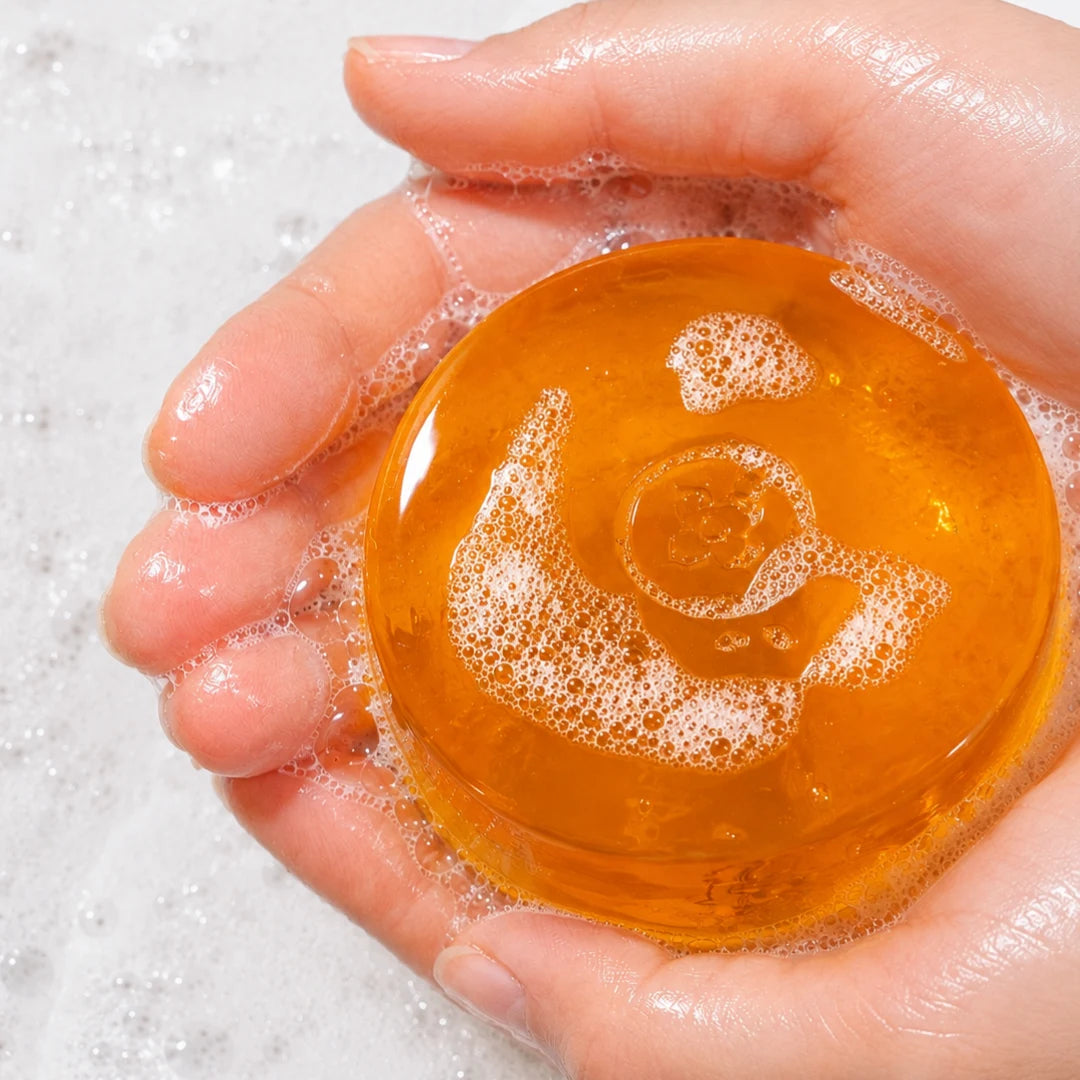








Mirai’s Deodorizing Soap is made with Japanese persimmon tannin extract, a traditional ingredient for menopause odor in Japan, along with green tea and no artificial fragrance.
Persimmon tannins are polyphenols, large plant molecules known to bind many other compounds, which is why they are used in deodorizing products. Green tea adds its own polyphenols. The soap is made to cleanse the top surface layer where nonenal sits.
removed nonenal
removed in rinsing
These results come from Mirai’s own product testing. They are not from a published clinical trial and don’t predict individual results.

Because nonenal collects where the skin is oiliest, focus where it tends to build up rather than just the underarms.
Use it from head to toe. It’s gentle enough for the face.
These are areas with more oil glands.
This gives the lather time on the skin.
Many customers report noticing a difference within the first week of daily use. That comes from customer reports, not a clinical timeline, and individual results vary. One bar lasts about six weeks.
"It lathers up beautifully. It's so gentle I can use it on my face, I can use it on my body."
"This is so awesome; I just love the way it’s so fresh!"
“The ‘old person smell’ was no joke it really affected my confidence. But after just a few washes, the Nonenal odor disappeared. I finally felt confident again.”
"I use Mirai Body Wipes after the gym. They quickly get rid of sweat and odors, leaving me feeling fresh and clean. Plus, they’re gentle on my skin with no irritation!”

“I have purchased this soap several times. It lathers great and rinses clean, with no buildup. And it truly does what it claims for odor I love it!”
"I recommend to all my friends who are having issues with body odor."

“I couldn’t stand that old person's smell, but Mirai’s body wash got rid of it. It’s well worth the cost, and I feel so much more confident now.”

 Deodorizing Soap with Persimmon
From€21,95
Hao S, Zhou Y, Nakanane S, Kohno Y, Sawamio K, Ohta H, Yamasaki K. Nonenal newly found in human body odor tends to increase with aging. Journal of Investigative Dermatology. 2001;116(4):520–524. This study describes age-related body odor. It did not test Mirai soap or any other product.
Mirai-reported testing. Not a published clinical trial.


